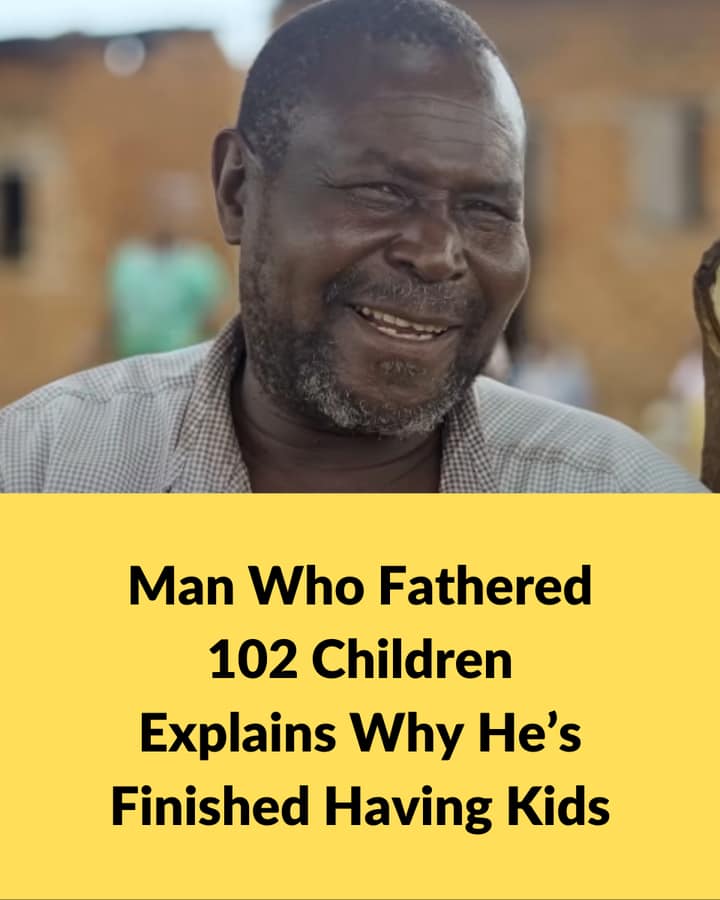
Father of 102: Why Ugandan Patriarch Musa Hasahya Is Stopping at a Record-Breaking Family Size

Father of 102: Why This Ugandan Patriarch Says He’s Done Having Kids
At 68, Ugandan farmer Musa Hasahya is the head of one of the largest families in his country—102 children and 568 grandchildren—born to 12 wives over several decades. Known for embracing cultural traditions that celebrate large households, Hasahya has now made a surprising announcement: he’s done having children. His decision, shaped by shifting beliefs and financial strain, marks a turning point in a life built around family.
A Life Shaped by Tradition
In Uganda, polygamy is both legal and widely accepted, with large families often seen as a sign of prosperity and strength. Hasahya began building his household in the 1970s, fully embracing these values. Over the years, each of his wives contributed multiple children, and his family expanded rapidly.
His children now range in age from 6 to 51, and for decades, he supported them through farming in his rural community. Traditionally, a man’s wealth was reflected in the size of his family, and Hasahya’s life seemed to embody that ideal.
Cultural Views on Family Planning
One reason for his enormous family lies in cultural attitudes toward birth control. In many Ugandan communities, contraceptives are stigmatized, sometimes linked to negative ideas about morality or fidelity. Within Hasahya’s household, none of his wives used birth control for many years, allowing the family to grow naturally and without limitation.
But times have changed. As resources have become harder to stretch, Hasahya has begun to openly promote birth control among his wives—something he would not have done in the past.
The Reality of Financial Strain
Ultimately, the turning point came down to money. Farming once provided enough to sustain his large household, but rising living costs and reduced income have left him struggling. As he explained, “My income has become lower and lower over the years due to the rising cost of living, and my family has become bigger and bigger.”
Today, about one-third of his children still live with him, along with his remaining wives, all sharing a single home. The challenge of providing food, shelter, and education for such a large group has led to tensions—two wives have left due to unmet needs.
The Challenges of Managing 102 Children
Managing a family of this size means navigating daily logistical and emotional hurdles. Hasahya openly admits he cannot recall all of his children’s names. His advancing age and health issues have reduced his ability to farm, forcing him to rely more on older children and wives for labor and household management.
A New Chapter: Embracing Birth Control
In a significant shift, birth control has now become part of the family’s conversation. His youngest wife, Zulaika—20 years younger than his eldest child—has given birth to 11 of his children but is now taking steps to stop. “I’ve seen the bad financial situation and am now taking the birth control pill,” she shared.
This marks a cultural and personal milestone for the family, signaling a move toward sustainable family sizes despite long-standing traditions favoring large households.
A Reflection of National Trends
Hasahya’s decision mirrors broader issues in Uganda, where rapid population growth strains resources, infrastructure, and the economy. Public health experts advocate for accessible and culturally sensitive family planning, alongside education to challenge misconceptions about contraception.
For families like Hasahya’s, such measures could balance tradition with the realities of modern life.
The Emotional Impact of Change
While the decision is rooted in financial necessity, it’s also deeply personal. Having built his identity around being a provider and patriarch, stepping back from fatherhood represents a major shift for Hasahya. Yet, he recognizes the long-term benefits for his children and grandchildren.
Despite the challenges, he remains respected in his community. His story is a reminder of the delicate balance between preserving cultural heritage and adapting to economic and social change.
A Legacy Redefined
Musa Hasahya’s journey is a testament to resilience and adaptability. Choosing to end his era of fatherhood does not diminish his legacy—it reshapes it. By embracing family planning, he’s ensuring a more secure future for the generations he’s already brought into the world, setting an example that even the most deeply held traditions can evolve when circumstances demand it.

Comments are closed, but trackbacks and pingbacks are open.