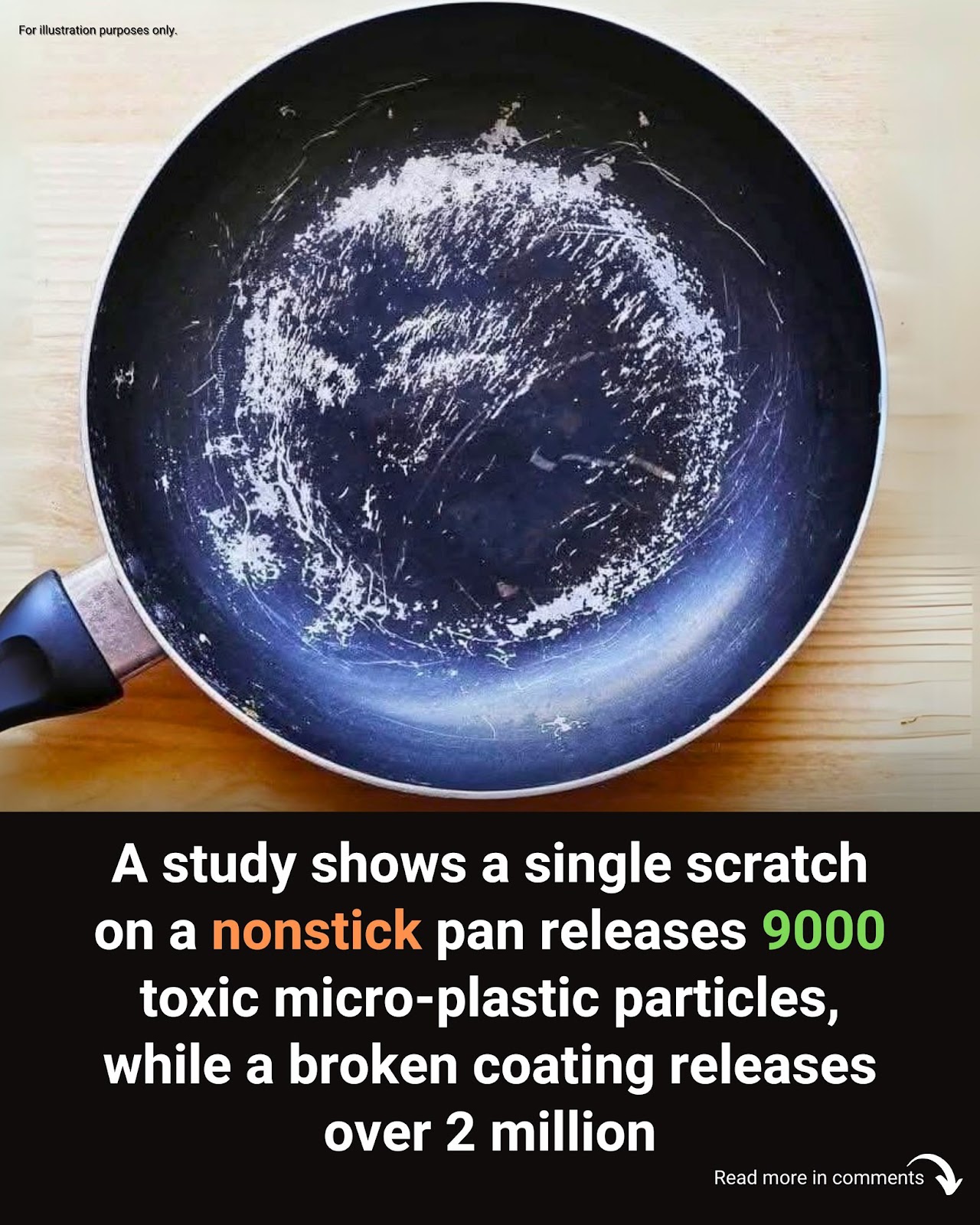

Hidden Dangers in Your Kitchen: How Non-Stick Pans Can Contaminate Your Food with Microplastics
Non-stick pans are a kitchen favorite, thanks to their easy-to-clean surface and low-fat cooking benefits. But beneath the surface, there’s growing concern that these convenient tools might be doing more harm than good. Recent research has revealed that damaged or aging non-stick coatings could be releasing millions of microplastic particles directly into your food.
What Are Microplastics and How Do They Get Into Your Food?
Microplastics are plastic fragments smaller than 5 millimeters, often produced from the breakdown of larger plastic items. In the case of non-stick cookware—especially those coated with polytetrafluoroethylene (PTFE), commonly known as Teflon—scratches or wear can release these particles during cooking.
One study published in Science of The Total Environment reported that “a single scratch on a Teflon-coated pan could release up to 9,100 microplastic particles.” Even more troubling, if the pan’s surface is significantly damaged, “over 2 million microplastics” can be released during normal cooking activities.
Why It Matters: The Health Risks of Microplastic Exposure
Although research into the long-term health effects of microplastics is still ongoing, scientists have found them in human organs, bloodstreams, and even lungs. The potential dangers include:
- Inflammation: Microplastics may cause internal irritation or immune responses.
- Hormonal Disruption: Some of the chemicals associated with microplastics can mimic or block hormones.
- Carcinogenic Risks: Certain substances found in plastics may be linked to cancer.
These risks make it especially important to limit unnecessary microplastic exposure in your daily life—starting in your kitchen.
Common Kitchen Habits That Worsen the Problem
Everyday cooking and cleaning techniques can accelerate the breakdown of non-stick coatings:
- Using metal utensils: Scraping the surface with metal tools causes scratches that release plastic particles.
- Harsh cleaning tools: Scouring pads and abrasive sponges wear down the coating.
- Washing damaged pans: Running water over scratched surfaces may loosen particles into the sink—or your next meal.
How to Reduce Your Risk
You don’t need to toss every non-stick pan immediately, but you can take practical steps to reduce exposure:
- Switch utensils: Use silicone, wooden, or plastic utensils to avoid scratching.
- Clean gently: Soft sponges and mild soap are best. Skip the steel wool.
- Inspect often: If a pan’s surface starts to peel, flake, or look scratched, it’s time to replace it.
- Try alternatives: Stainless steel, cast iron, and ceramic pans offer safe, durable, and microplastic-free options.
Microplastics Beyond Cookware
Unfortunately, cookware isn’t the only source. Microplastics are also released from:
- Plastic storage containers
- Synthetic cutting boards
- Plastic kitchen tools and disposable items
To lower your overall exposure, choose materials like glass, stainless steel, or wood whenever possible.
Final Thoughts
Non-stick pans may be convenient, but they come with hidden risks—especially as they wear down. Understanding how microplastics enter your food and how to minimize their release can help you make better decisions for your health and for the planet.
“A single scratch on a Teflon-coated pan could release up to 9,100 microplastic particles.”
By taking simple steps to care for your cookware—or switching to safer alternatives—you can significantly reduce your exposure to these tiny, but potentially harmful, particles.
Spread the love

Comments are closed, but trackbacks and pingbacks are open.