
That Dent on Your Milk Jug? Here’s the Surprising Reason It Exists
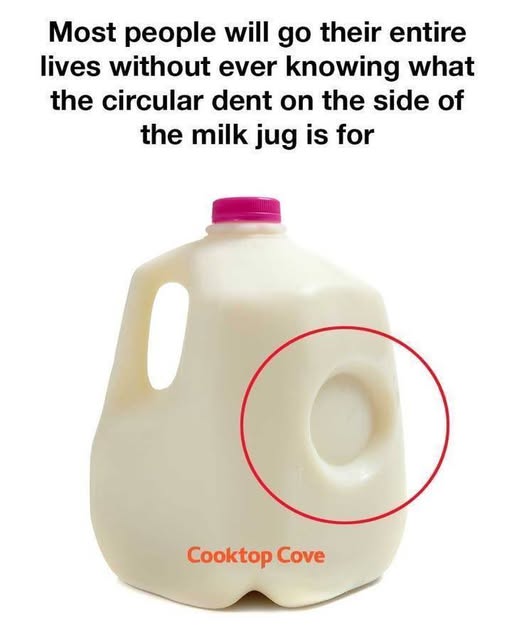
If you’ve ever picked up a gallon of milk, you’ve probably noticed it — a small, round indentation pressed into the side of the jug. It’s easy to dismiss as a manufacturing quirk, but this subtle detail is actually a smart piece of engineering with a big job to do.
From Glass Bottles to Smarter Plastic
Decades ago, milk was delivered in glass bottles — heavy, fragile, and costly to transport. The switch to high-density polyethylene (HDPE) plastic in the mid-20th century solved those problems, offering lighter and more durable containers. But plastic brought a new challenge: without the right design, thin-walled jugs could bulge, collapse, or warp during transport, storage, or temperature changes.
The answer? A simple circular indentation. This feature strengthened the jug’s structure, allowed it to flex safely with pressure changes, and reduced the need for thicker (and heavier) plastic walls.
How the Dent Works
1. Built-In Pressure Relief
When cold milk warms slightly — during transport or when you pull it from the fridge — the air inside expands. The dent acts like a pressure cushion, flexing outward instead of letting the jug bulge or crack.
2. Extra Strength Without Extra Plastic
Just like folds in cardboard add strength, the indented circle adds rigidity to the jug. This helps it keep its shape under stacking, squeezing, or the pressure of being filled.
3. A Handy Bonus — Better Grip
Though not the main reason for its existence, the dent can make it a little easier to hold, especially when the jug is cold and slippery with condensation.
Safety, Savings, and Sustainability
The dent isn’t just clever — it’s efficient. Without it, manufacturers would need to use thicker walls to keep jugs from deforming, which means more plastic, higher costs, and heavier shipments. By adding a flex point instead, the jug stays lightweight, safe, and affordable.
What Happens Without It?
Without this design, milk jugs could:
- Bulge or collapse under pressure changes
- Require more plastic, increasing cost and environmental impact
- Be more prone to leaks or splits during handling and transport
Why This Tiny Detail Matters
This little circle is proof that small design tweaks can have big effects. It balances cost, safety, sustainability, and user convenience — all in one subtle feature that most people never notice.
Quick Summary
| Feature | Purpose |
|---|---|
| Circular indentation | Absorbs internal pressure changes |
| Added rigidity | Prevents warping or collapse under load |
| Maintains form | Keeps jug shape during storage and transport |
| Lightweight design | Reduces material use, cost, and environmental footprint |
Final Pour
The circular dent on your milk jug isn’t decorative — it’s a quiet engineering win. Next time you pour a glass of milk, you’ll know that this small feature is doing big work behind the scenes, making your jug safer, stronger, and more eco-friendly.

Comments are closed, but trackbacks and pingbacks are open.